This Temperature Converter provides precise conversions between Celsius, Fahrenheit, and Kelvin according to internationally recognized SI-based formulas. Whether you’re studying science, working on a project, or simply curious about temperature changes, this tool provides fast and reliable results. Just enter a value, choose your units, and get precise conversion.
Common Temperature Conversion
Below is a list of common temperature conversions to help you quickly compare different units that are frequently used in daily life. You’ll find examples such as 25°C to °F, 100°F to °C, 300 K to °F, and several other widely used conversions.
Celsius to Fahrenheit
- 16 celsius to fahrenheit → 60.8°F
- 19 celsius to fahrenheit → 66.2°F
- 20 celsius to fahrenheit → 68°F
- 22 celsius to fahrenheit → 71.6°F
- 23 celsius to fahrenheit → 73.4°F
- 24 celsius to fahrenheit → 75.2°F
- 25 celsius to fahrenheit → 77°F
- 30 celsius to fahrenheit → 86°F
- 33 celsius to fahrenheit → 91.4°F
- 38 celsius to fahrenheit → 100.4°F
- 42 celsius to fahrenheit → 107.6°F
- 43 celsius to fahrenheit → 109.4°F
- 160 celsius to fahrenheit → 320°F
- 170 celsius to fahrenheit → 338°F
- 180 celsius to fahrenheit → 356°F
- 190 celsius to fahrenheit → 374°F
Kelvin to Fahrenheit
- 0 kelvin to fahrenheit → -459.67°F
- 1 kelvin to fahrenheit → -457.87°F
- 100 kelvin to fahrenheit → -279.67°F
- 200 kelvin to fahrenheit → -99.67°F
- 273 kelvin to fahrenheit → 31.73°F
- 290 kelvin to fahrenheit → 62.33°F
- 300 kelvin to fahrenheit → 80.33°F
- 350 kelvin to fahrenheit → 170.33°F
- 500 kelvin to fahrenheit → 440.33°F
- 4000 kelvin to fahrenheit → 6740.33°F
Fahrenheit to Celcius
- 5 fahrenheit to celcius → -15°C
- 20 fahrenheit to celcius → -6.66°C
- 32 fahrenheit to celcius → 0°C
- 50 fahrenheit to celcius → 10°C
- 70 fahrenheit to celcius → 21.11°C
- 75 fahrenheit to celcius → 23.88°C
- 80 fahrenheit to celcius → 26.66°C
- 82 fahrenheit to celcius → 27.77°C
- 90 fahrenheit to celcius → 32.22°C
- 95 fahrenheit to celcius → 35°C
- 100 fahrenheit to celcius → 37.77°C
- 101 fahrenheit to celcius → 38.33°C
- 104 fahrenheit to celcius → 40°C
- 110 fahrenheit to celcius → 43.33°C
- 120 fahrenheit to celcius → 48.88°C
- 150 fahrenheit to celcius → 65.55°C
- 350 fahrenheit to celcius → 176.667°C
What Is Temperature?
Temperature is the measurement that describes the degree of being cold or hot .The most common tool used to dc the measurement of the temperature is thermometer. Kinetic energy of the atoms used it is reflected in the temperature, the faster they move the higher is the temperature. Most widely used scales of measurement of temperature are Celsius scale (°C) , Fahrenheit scale (°F), the Kelvin scale (K).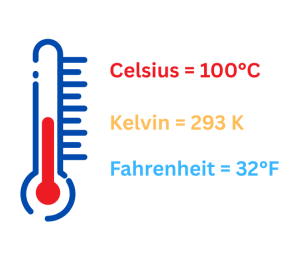
Why Temperature Conversion Is Important
Providing a consistent and standard of temperature unit conversion across the scales is the main aim of temperature conversion. The conversion is essential to know because in various system are used different scales, for some people is little confusing to understand the value of the temperature from scale to scale. In meteorology, physics, engineering and chemistry is crucial to follow the international standards of conversion, because it provides accuracy in measurement and reporting. An example of the importance of conversion can be for person traveling in the US when the default scale is Fahrenheit and the person is used to Celsius .Understanding Temperature Scales
As we mentioned before the 3 scales of temperature, they are units parameters used for measuring temperature with the help of thermometer. Different states use different scales like Us that uses Fahrenheit, but most commonly scale used world-wide is Celsius. Kelvin scale is used mostly by scientific and engineering for different purposes in their fields.Boiling and Freezing point for each Temperature Scale :
Water’s freezing point :- Celsius = 0 °C
- Kelvin = 273.15K
- Fahrenheit = 32°F
- Celsius = 100 °C
- Kelvin = 373.15K
- Fahrenheit = 212°F
Formulas to Manually Convert Between Temperature Units :
- Celsius To Fahrenheit = ( Temp.(°C) x 9/5 ) + 32
- Celsius To Kelvin = Temp.(°C) + 273.15
- Fahrenheit To Kelvin = ( Temp.(°F) − 32) x 5/9 + 273.15
- Fahrenheit To Celsius = (Temp.(°F) − 32) x 5/9
- Kelvin To Celsius = Temp.(K) − 273.15
- Kelvin to Fahrenheit = (Temp .(K) − 273.15) x 9/5 + 32
How to use the Temperature Converters
- Enter the temperature value.
- Choose the unit to convert to.
- Click “Convert Unit”.
Frequently Asked Questions (FAQs)
1. Why is the Kelvin scale used in science and engineering?
Kelvin is an absolute scale where 0 K is the coldest possible temperature (absolute zero). Scientists like it because it never goes negative, which makes calculations easier.
2. What is “normal” human body temperature?
Normal human body temperature is generally considered to be around 98.6°F or 37°C.
3. Is one temperature scale more accurate than another?
Not really. Celsius, Fahrenheit, and Kelvin are all accurate, they just measure the same thing in different ways, and use different reference points and degree size.
4. What is the SI unit for temperature?
The SI (International System of Units) unit is the Kelvin (K). Celsius and Fahrenheit are commonly used too, but Kelvin is standard in science.
5. Which temperature scale is used where?
Celsius (°C) is used almost everywhere for daily life, fahrenheit (°F) is mainly used in the United States, and kelvin (K) is mostly used in science, like physics and chemistry.
6. What is absolute zero?
Absolute zero is the coldest temperature possible, when atoms stop moving. It is 0 K, which is about -273.15°C or -459.67°F.
Explore More of Our Tools
Discover additional calculators that can help you with a variety of everyday tasks and calculations. These calculators are designed to help you solve a wide range of everyday problems quickly and accurately. Our site offers a variety of helpful calculators designed to make your life easier. Click on any of the tools below to explore related calculators and discover more ways to quickly perform everyday calculations.
Pressure Units Converter →
Helps you to convert pressure units like psi, atm, bar, etc.
Length Units Converter →
Helps you to convert length units like cm, m, ft, mi, etc
Mass Unit Converter →
Helps you to convert pressure units like gr, kg, lbs, oz, etc